Communities

Writing
Writing
Codidact Meta
Codidact Meta
The Great Outdoors
The Great Outdoors
Photography & Video
Photography & Video
Scientific Speculation
Cooking
Cooking
Electrical Engineering
Judaism
Judaism
Languages & Linguistics
Software Development
Mathematics
Mathematics
Christianity
Christianity
Code Golf
Code Golf
Music
Music
Physics
Physics
Linux Systems
Linux Systems
Power Users
Power Users
Tabletop RPGs
Tabletop RPGs
Community Proposals
Community Proposals
tag:snake search within a tag
answers:0 unanswered questions
user:xxxx search by author id
score:0.5 posts with 0.5+ score
"snake oil" exact phrase
votes:4 posts with 4+ votes
created:<1w created < 1 week ago
post_type:xxxx type of post
Search help
Notifications
Mark all as read See all your notifications »
Q&A

Comments on Choosing between common-drain JFET amplifier, and common-source

Post

Choosing between common-drain JFET amplifier, and common-source

+3
−0

Do common-source JFET amplifiers have an advantage over common-drain? The JFET would be in a low noise photodiode amplifier. The signal is 100us pulses with 10us raise times.

Here are the schematics which I have in mind.
The op-amp would be LTC6252 or LT6200. Single-supply operation is desirable for me.

Common-drain
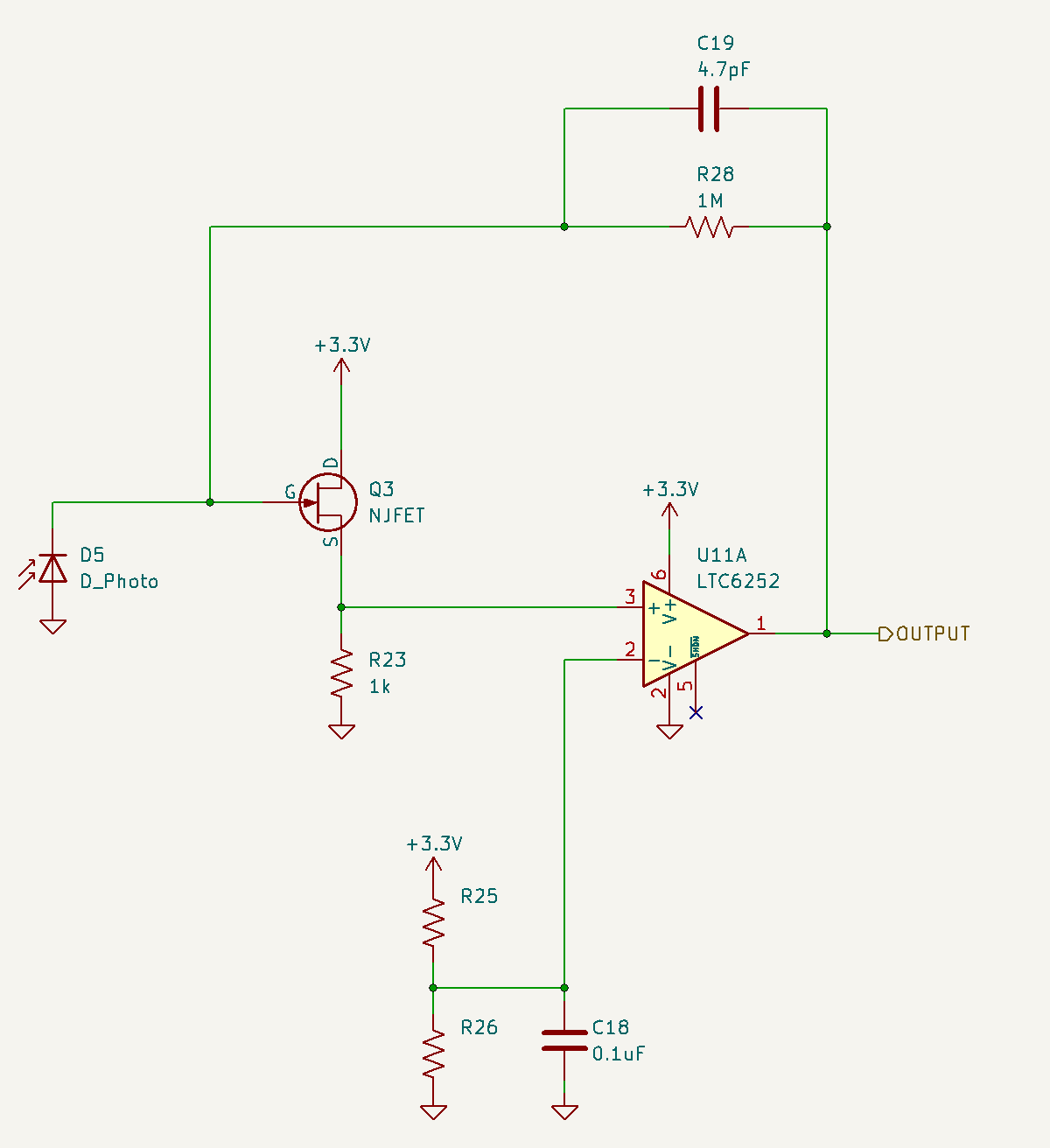
Schematic snippet.  Common-drain photodiode amplifier consisting of a JFET and and operational amplifier. I picked up this common-drain idea from the LT6200 datasheet (application example on the first page).

Common-drain JFET has a prototyping appeal, because it would be easy to try a simple transimpedance op-amp (without a JFET) on the same PCB. Fallback position.

Common-source
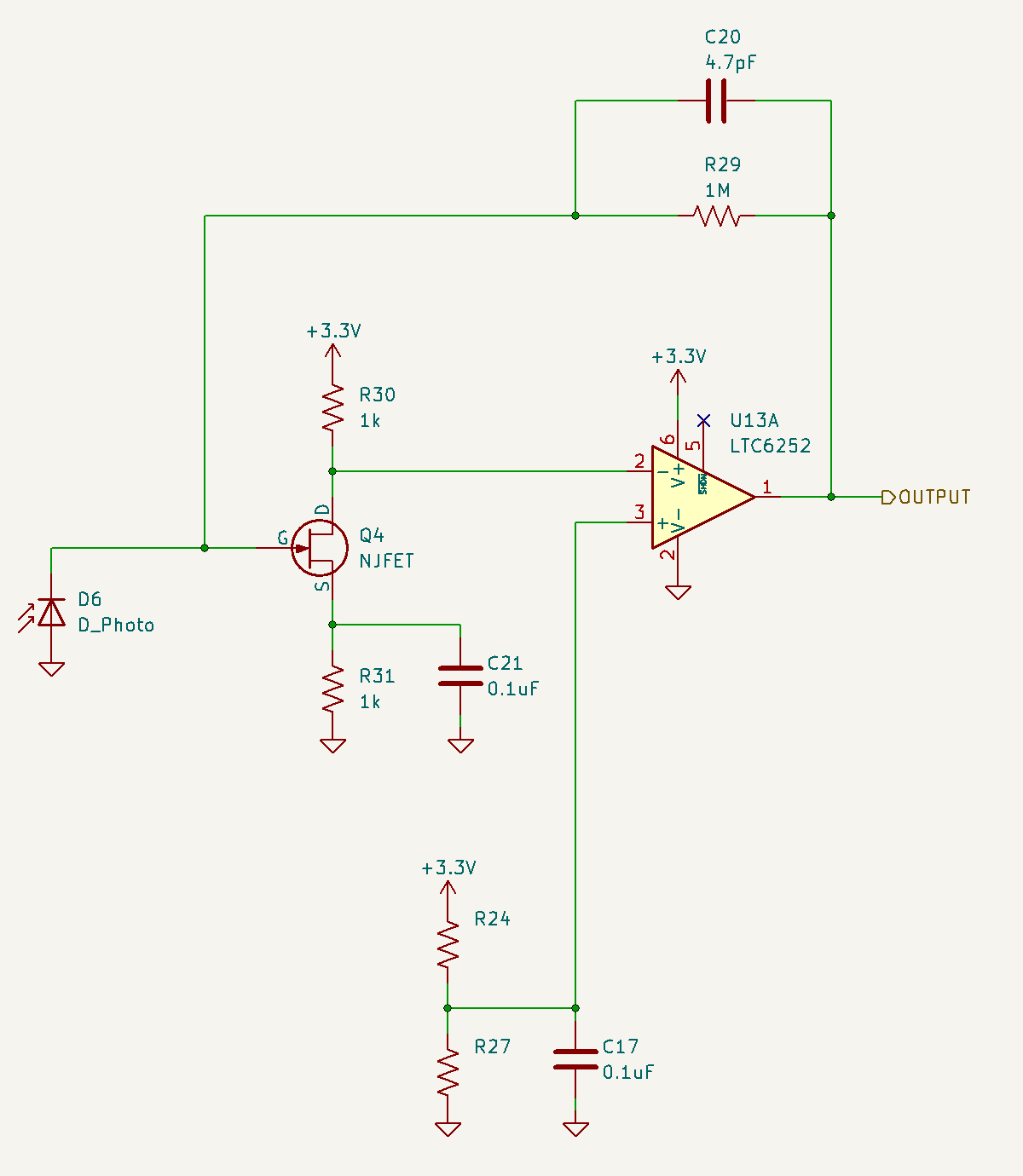
Schematic snippet.  Common-source photodiode amplifier consisting of a JFET and and operational amplifier. I picked up this common-source idea from this app note.

History

2 comment threads

Compound transimpedance amplifier (1 comment)
Links not to datasheets (1 comment)
Compound transimpedance amplifier
Nick Alexeev‭ wrote 6 days ago

The goal of this JFET circuit is to have a fast op-amp with low input bias current. Another way to achieve the same goal is to use compound (TIA). The first op-amp is chosen for low input bias current and low noise. It could be a FET op-amp. The second op-amp is chosen for high bandwidth. It could be a bipolar op-amp. Details about compound TIA here https://www.edn.com/edn-access-05-22-97-embedded-gain-supercharges-fet-transimpedance-amplifier (by Michael Steffes, EDN, 1997)